

Hong Kong and the Shadow Fleet: How One City Helped Sustain Maduro’s Oil Trade
On February 9, 2026, after a weeks-long pursuit that reportedly stretched from the Caribbean to the Indian Ocean, US forces boarded the tanker AQUILA II. It was a dramatic episode in Washington’s effort to choke off Venezuela’s oil trade prior to the removal of the country’s dictator, Nicolas Maduro. Behind the scenes, however, it was a window into the key role one city played in keeping the Venezuelan regime alive: Hong Kong. AQUILA II’s registered owner was Linnet Marguerite Ltd., a Hong Kong company. A Hong Kong corporate services firm, Galaxy Business Co., provided Linnet Marguerite and many others like it with a registered address and a sheen of legitimacy. And it wasn’t just the AQUILA II: Of the fourteen vessels seized or sanctioned in the lead up to Maduro’s removals, at least ten had ties to Hong Kong.
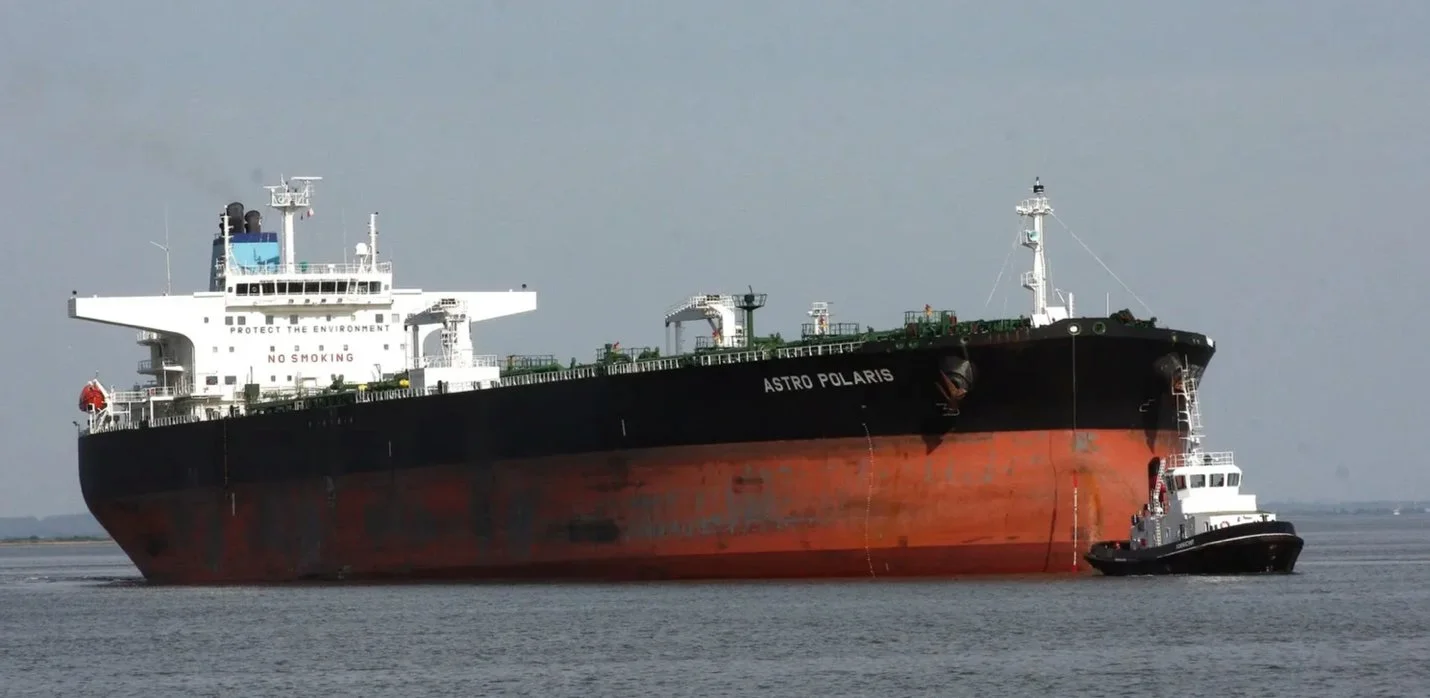
Figure 1: AQUILA II under a prior name, ASTRO POLARIS
Whatever one thinks of the US government’s unilateral actions toward Venezuela in recent months, there should be no confusion about what networks like this helped sustain. Maduro’s regime remained in power through repression, corruption, and the systematic plunder of state resources while ordinary Venezuelans paid the price. The vessels moving Venezuelan crude outside normal channels were part of that survival strategy. They were part of what is commonly called the shadow fleet, the loose and constantly shifting ecosystem of ageing tankers, opaque shell companies, false flags, ship-to-ship transfers, and other deceptive practices used to move sanctioned oil for regimes such as Russia, Iran, and Venezuela.
The usual way of telling this story is as a maritime one, about suspicious voyages, evasive manoeuvres, and interdictions at sea. But the more important story is often on land. Again and again, when the ownership and management chains behind these vessels are traced backwards, they lead to Hong Kong, to shell companies incorporated there, to secretarial firms that provide them a sheen of legitimacy, and to a Western sanctions designation and enforcement system that fails to identify targets hidden in plain sight.
The Maduro-Linked Shadow Fleet and its Ties to Hong Kong
On December 31, 2025, the US Treasury sanctioned four oil tankers and their affiliated companies for allegedly facilitating Venezuelan oil sales used to prop up the Maduro regime: Corniola Limited and Krape Myrtle Co. Ltd., the owner and manager of the NORD STAR; Winky International Limited, owner of the ROSALIND; and Aries Global Investment Ltd., owner of the DELLA and VALIANT. As the South China Morning Post reported at the time, all four listed registered addresses in Hong Kong, and all but Winky were incorporated under Hong Kong law. In each case, the Office of Foreign Assets Control (OFAC) identified the company as operating in the oil sector of the Venezuelan economy and treated the vessels themselves as blocked property.
Those sanctions came amidst an even more extraordinary series of interdictions at sea. Between December 10, 2025, and February 24, 2026, US forces boarded and seized ten oil tankers alleged to have been facilitating Venezuelan oil sales. Of those ten vessels, six were or had recently been linked to Hong Kong entities: CENTURIES, M SOPHIA, OLINA, SAGITTA, VERONICA III, and AQUILA II. In some cases, the Hong Kong connection lay in the registered owner. In others it appeared in a prior owner, a newly inserted shell company, or a Hong Kong-based management or corporate services structure that emerged as the vessel changed hands.
| Ship Name (Previous Name) | Ship Owner/Manager | Vessel sanctions | Corporate entity sanctions |
|---|---|---|---|
| Venezuela-linked vessels seized by the US – Dec 10, 2025, to Feb 24, 2026 | |||
| Skipper (Adisa) |
Nigeria (Beneficial Owner/Operator Thomarose Global Ventures Ltd.) Marshall Islands (Registered Owner Triton Navigation Corp., tied to Russia) |
US |
Thomarose – None Triton – US |
| Centuries | Hong Kong (Centuries Shipping Ltd.) | None | None |
| Marinera (Bella 1) | Russia/Panama (Louis Marine Shipholding Enterprises SA, changed name and owner mid-pursuit to Russian flag; Reportedly, beneficial owner is Russia’s Burevestmarin LLC) | US |
Louis Marine - US Burevestmarin - None |
| M Sophia | Marshall Islands/Hong Kong (Marshall Islands’ Maisie Ltd., previously Hong Kong’s Sunne Co Ltd) | US, UK, Canada |
Maisie – None Sunne Co – US |
| Olina (Minerva M) | Hong Kong (Tantye Peur Ltd.) |
US, UK, EU, Canada |
None |
| Veronica (Pegas) | Russian (Burevestmarin LLC, previously PSB Leasing LLC) | US | US |
| Sagitta | Hong Kong (Camellia Jackson Ltd., previously Sunne Co. Ltd.) |
US, UK, EU, Canada |
Camellia Jackson – None Sunne Co – US |
| Aquila II | Hong Kong (Linnet Marguerite Ltd.) |
US, UK, EU, Canada |
None |
| Veronica III | Hong Kong (Volans Delta Ltd); China (Manager–Shanghai Future Ship Management Co. Ltd.) | US |
Volans Delta – None Shanghai Future – US |
| Bertha | China (Centaurus Min Ltd., Ship Manager Shanghai Legendary Ship Management Co. Ltd.) | US |
Shanghai Legendary – US Centaurus Min - None |
| Venezuela-linked vessels sanctioned by the US on December 31, 2025 | |||
| Nord Star | Hong Kong (Corniola Ltd.; Ship Manager Krape Myrtle Co Ltd.) | US | US |
| Rosalind (Lunar Tide) | Organised in Marshall Islands; registered address in Hong Kong (Winky International Ltd.) | US, UK, EU, Canada |
US |
| Della | Hong Kong (Aries Global Investment Ltd.) | US | US |
| Valiant | Hong Kong (Aries Global Investment Ltd.) | US | US |
These Venezuela-linked vessels are one branch of a much broader architecture of sanctions evasion. The shadow fleet serves authoritarian regimes across the world, particularly Russia, Iran, Venezuela, and North Korea, using shifting shell companies, opaque ownership structures, flag changes, ship-to-ship transfers, and other deceptive practices to move sanctioned oil outside normal commercial channels. Wherever the shadow fleet operates, however, Hong Kong repeatedly appears as a crucial corporate hub.
In Hong Kong, ownership can be shifted to a new entity quickly and cheaply, often within days, making the jurisdiction highly attractive to shipowners seeking to stay ahead of sanctions authorities. And unlike many other offshore financial centres, Hong Kong has increasingly been willing to openly defy the global financial system and democratic order, with the city’s leaders declaring that they will not participate in multilateral sanctions on Russia and even dismantling the Legislative Council body responsible for UN sanctions oversight. The listed directors and shareholders behind these companies frequently have little or no public profile, no obvious maritime background, and no readily ascertainable source of wealth. Hong Kong authorities do not verify this information, providing an easy-to-manipulate system to hide beneficial owners and sources of funding. In practice, Hong Kong’s incorporation system allows beneficial owners and sources of funding to be obscured behind layers of nominees, secretarial firms, and interchangeable shell entities.
The vessels themselves are equally adaptable. By relying on ship-to-ship transfers in the open sea, false flags, transponder manipulation, and other practices, operators can keep cargo moving while reducing the scrutiny that would come with entering port under a sanctioned identity.
The US, and to some extent partners in the UK and EU, have sanctioned many of these vessels and their registered owners, either for their involvement with Venezuela or earlier role in trading with Russia, but that only underscores the weakness of current enforcement. The registered corporate owner of a shadow fleet tanker is often designed to be disposable. In places like Hong Kong, it is exceedingly easy to shift ownership to a new entity within days—a major reason why it is such an enticing location for shipowners seeking to stay a step ahead of sanctions authorities. When one entity is exposed, sanctioned, or abandoned, another can be inserted in its place.
One of the seized vessels, SAGITTA, illustrates the point well: its previous Hong Kong owner, Sunne Co. Ltd., was sanctioned for Russia-related conduct, filed a dormancy resolution shortly afterwards, and was deregistered in July 2025, while the vessel had already moved to a successor Hong Kong owner, Camellia Jackson Ltd. Camellia and its backers remain unsanctioned. In other cases, the registered vessel owners have regularly changed their directors and shareholders to obfuscate their true ownership. Corniola Ltd, for example, changed its listed owner and director in August 2025, months before Treasury sanctioned it in connection with the NORD STAR.
Galaxy Business Co and the Failure of Sanctions Policy
While US and allied sanctions policy has focused on interchangeable vessel identities and ever-shifting corporate owners, the sanctions have largely failed to target participants that are not so easily hidden, dissolved or reinvented: Established firms providing critical corporate services in Hong Kong such as corporate secretarial services firms, banks, and logistics providers.
One such company is Galaxy (Hong Kong) Business Co. Ltd. Galaxy is a corporate services firm based in Shenzhen, China, just over the border from Hong Kong, with a registered corporate entity in Hong Kong’s Kwun Tong district. It provides what the industry calls “secretarial services” — the administrative backbone without which Hong Kong companies cannot legally function: filing annual returns, maintaining registered addresses, and managing the statutory paperwork that gives a shell company its legal standing.
The firm’s registered owner and sole director, Hao Zeng (曾浩), was twenty-four years old when he incorporated its predecessor, Wei Jie Hao Business Co., in November 2018, giving a residential building in Hong Kong’s Kowloon Peninsula as the company’s address.
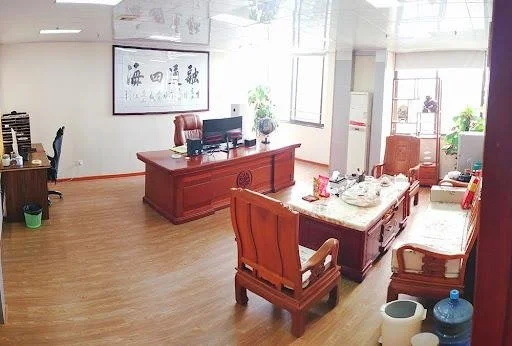
Figure 2: Galaxy Business Co.’s main office in Shenzhen, China
Galaxy’s connections to Venezuela’s shadow fleet are remarkable for a single secretarial services company. Hong Kong Companies Registry filings show that Galaxy has acted as corporate secretary to at least four companies whose vessels have been seized or sanctioned by the United States: Corniola Ltd. and Krape Myrtle Co. Ltd., co-owner and manager of the NORD STAR (sanctioned December 31, 2025); Tantye Peur Limited, owner of the OLINA, which was operating under a fraudulent Timor-Leste flag when it was seized by the US on January 9, 2026; and Linnet Marguerite Ltd., owner of the AQUILA II, which was already under US, UK, and EU sanctions when it was boarded in the Indian Ocean on February 9, 2026.
It is unlikely that Galaxy was unaware of its clients’ involvement in the Shadow Fleet; in several cases, Galaxy became the secretarial services provider for these companies after they were sanctioned. In the case of Linnet Marguerite, Galaxy accepted the role in June 2025—after AQUILA II had already been designated by the US Treasury in January of that year. As for Tantye Peur, the company was incorporated in December 2024, with Galaxy as its secretary from the outset, apparently for the purpose of taking ownership of the OLINA, which had been on the OFAC sanctions list since 2021 under its previous name, MINERVA M. Galaxy has, in other words, developed a business niche in providing corporate scaffolding to companies whose core function was owning and operating Shadow Fleet vessels.
Unlike the efforts of Shadow Fleet ship owners to conceal themselves, however, Galaxy seemingly makes little effort to hide its owners and employees. The company’s staff members promote their services on LinkedIn, Facebook, and Instagram without apparent concern. Jackson Wong, Galaxy’s Hong Kong-based business manager, maintains social media profiles listing services including “incorporation and maintenance services in the UK/USA/Singapore/Cayman Islands/Seychelles/BVI and other jurisdictions.” In an August 2020 Facebook post, he advertised the ability to open a “foreign trade emergency account” at Citibank’s New York branch. Jianquan Zhuo, who has listed his Galaxy employment continuously since July 2019 and whose Facebook profile was updated as recently as December 2025, posts images of international flags alongside lists of countries where Galaxy can assist with company formation; he also maintains a public Instagram page inviting “every company going overseas” to contact him.

Figure 3: Jackson Wong’s LinkedIn profile advertising Galaxy’s corporate secretarial services across the world
The company also maintains a website — largely unchanged since at least October 2020 — explicitly advertising the ability to open accounts at Western banks including HSBC, Standard Chartered, and Citibank. This website provides phone numbers to contact “Director Zeng”—presumably the registered owner and director, Hao Zeng—as well as “Director Liang.”
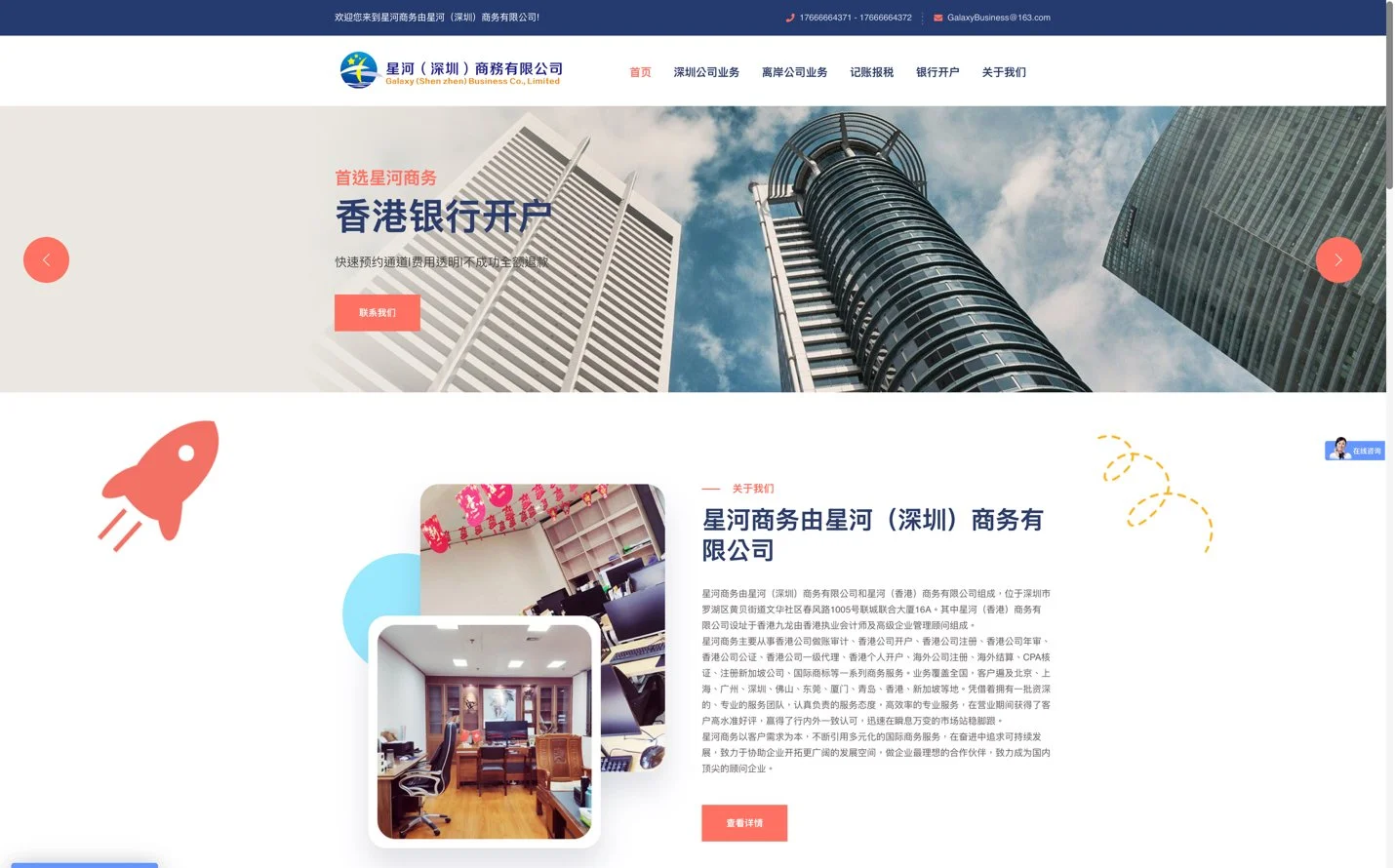
Figure 4: Galaxy website front page
None of this is difficult to find. It is indexed, searchable, and in plain sight. And yet, as of this writing, neither Galaxy’s Hong Kong nor Shenzhen entities, nor Hao Zeng nor any of Galaxy’s publicly identifiable employees, appear on OFAC’s Specially Designated Nationals list, or on any equivalent UK or EU register.
The failure to target Galaxy illustrates a structural problem with how Venezuela sanctions—and the broader Western sanctions programs against Russia, Iran, and other dictatorships—are enforced. Sanctions designations under these programs appear far reaching at first glance, with new companies regularly added to the list. But looking closer, they often amount to ineffective half-measures: investigating only far enough to determine the names of disposable corporate owners, rarely sanctioning the corporate and financial support firms behind these entities, and only occasionally doing the investigative work necessary to target individual owners and employees who keep the shadow fleet in service.
Under Hong Kong law, a corporate secretary is not a passive bystander: every incorporated company is required by statute to appoint one, and the secretary bears formal responsibility for maintaining the company’s compliance record, signing regulatory documents, and remaining familiar with the company’s structure. Nor are other established support firms, such as banks and logistics providers, innocent of the roles they play in enabling these networks. By their nature, the owners and employees behind such firms are more easily identifiable, and thus more easily sanctionable. Yet as sanctions authorities continue targeting the disposable shells at the top of this architecture while leaving the individuals and firms beneath them untouched, the machinery remains fully operational, ready to be reused for the next company and the next vessel.